Environmental Contracts & That Glue
Today at Native Meadow #51

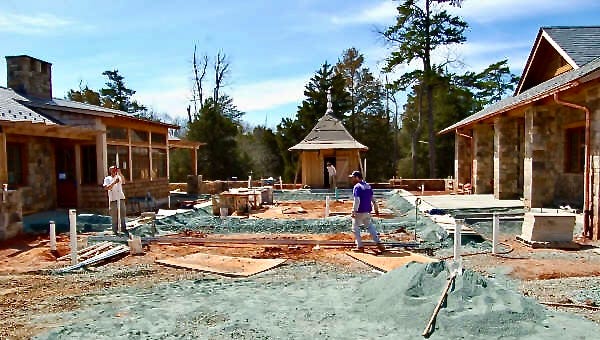
When we built the house at Native Meadow we did our best to apply environmental safety ethics to our choices on materials and process.
One of the results is that for years now, I run around behind people with coasters and still stand in amazement that folks no longer think much about putting wet icy glasses or very hot cups down on wood. Or think nothing of leaving wet towels on wood floors.
Who raised you?
Maybe it was an industry that began to automatically seal everything. Maybe polyurethane finishes on wood has become assumed.
However, the positive results of our decision to say, build a house with no formaldehyde, far outweigh coaster guard duty or even the need for frequent oiling. The air in this house was immediately and remains clean and fresh in a way that is noticeable and important to this woman with her many allergies. Another way my sweet place renders me increasingly at odds with the larger world.
Paradoxically, it was early efforts to increase energy efficiency in the late 60’s and 70’s due to an “energy crisis” (then defined as decreased supply and higher costs for fossil fuels) that may have made indoor air quality worse.
“Accompanying the increased tightness of buildings for energy efficiency were increasing concerns about the impact of indoor environmental quality (IEQ) on health. These concerns included exposures to toxic substances, such as friable asbestos in insulation, chemicals like PCBs in caulk and other building materials, radon from surrounding gravel, and lead in paint. Indeed, energy improvements could exacerbate these health concerns, such as releasing asbestos into the indoor environment when existing insulation and HVAC systems were disturbed. The phenomenon of “sick building syndrome” emerged in the early 1980s as the prevalence of complaints of building-related health problems increased (Spengler and Chen 2000). Spengler and Chen (2000) argue that in addition to sealing and reduced ventilation, it was changes in construction from heavy site-built construction to lightweight-premanufactured systems that produced indoor environmental quality issues.” -National Library of Medicine
Building this house we chose least harm materials. In every instance attempting to look at the environmental impact of each material at the point of creation/extraction, at the point of delivery (sourcing materials as close as possible to the site) and at the points of installation and use. And we made all our subcontractors sign an environmental contract which is copied below.
Which led to a good bit of grumbling.
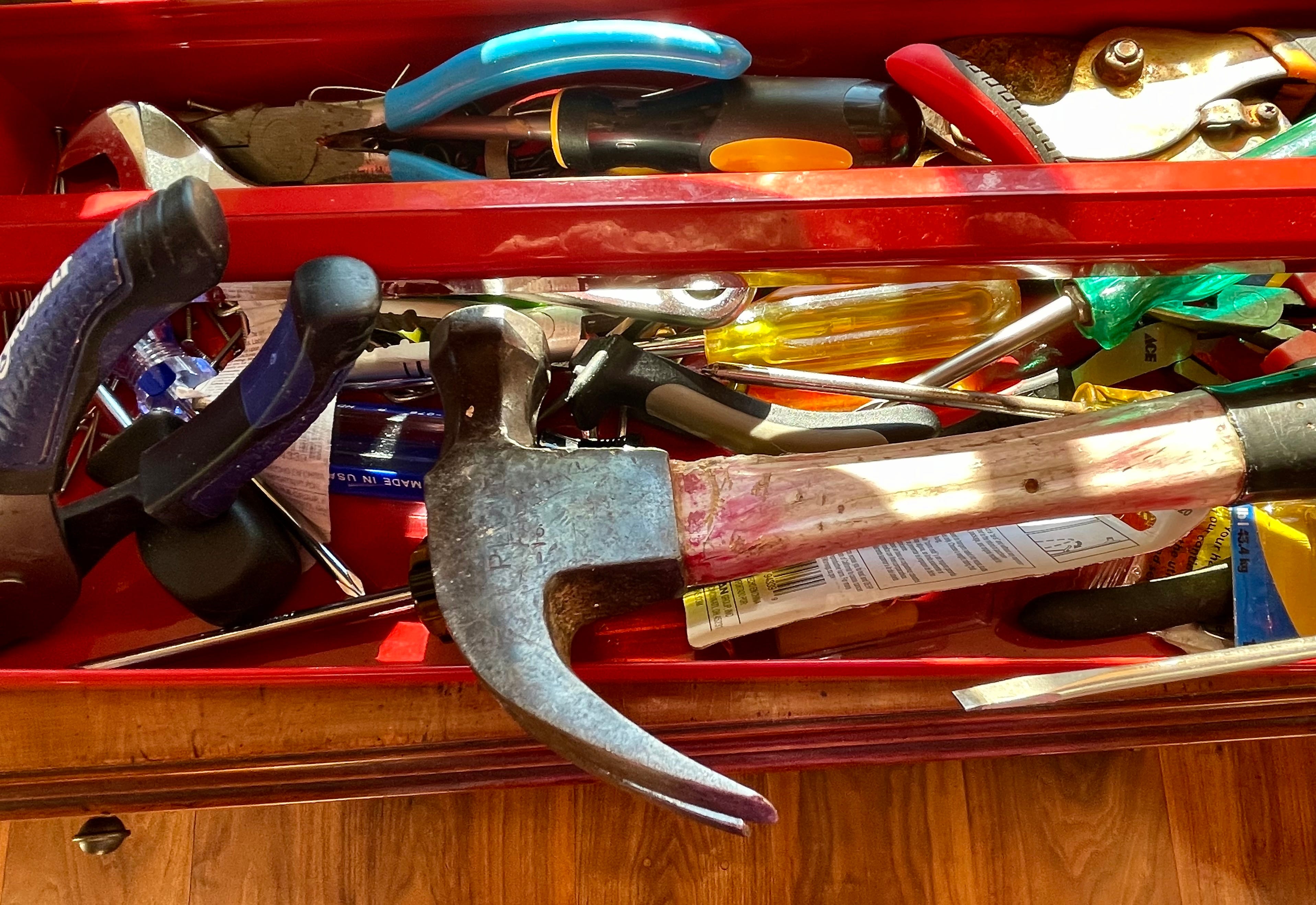
At one point we offered a safer glue to all workers and asked them to replace their normal glue with that less toxic alternative. General response: how dare this lady come into my tool box!!!
One carpenter was reluctant, nay incensed, and described the difference between what we were offering and the glue he had in tones often used by men when describing a car that will go 120 mph. And where, I have always asked, are you going to be able to drive that fast?
Our disgruntled carpenter said he could stand on a floor joist held by his glue with both feet and that no matter how much he swayed his weight that joist would not budge at all.
“Is this safer glue strong enough to support a good floor?” I finally asked.
“Oh sure,” he confessed, “It’s fine for that.” he said, revealing a bias for just the strongest thing even if that strength is not really needed.
What that bias has meant for adequate environmental regulation, for common sense gun control, for appropriate use of force policy and for nuclear arms control is worth a ponder.
I got his glue though, glad to protect his huffy lungs.
Environmental Ethic Agreement

We've been working hard for three years to clean up and restore the pond, remove invasive plants, and start a meadow of native grasses and wildflowers in the field --all without pesticides, herbicides, or any other chemicals.  It's a delicate balance, and soil or chemical runoff from construction will throw it out of whack really quickly, easily and permanently since we can't use chemicals to fix it.

We're asking everyone working on the project to pledge to help us keep the water, the land and its wildlife healthy.  It will take some extra care.  It means a lot to us and to you.  The pond and creek go straight to your county drinking water reservoir.

Contractors who refuse to sign this agreement will not be permitted to work.  Contractors who do not follow the procedures outlined below will be fined in proportion to the damage caused or dismissed from the job without pay.

--I agree not to dump or pour out chemicals onsite.  (Even a small amount can do harm.) This includes but is not limited to paints, paint thinners, solvents, cement (wet or dry), fuels and oils.  Chemicals should be disposed of in accordance with all local, state and federal laws.  Chemicals stored onsite or in waste containers must be tightly sealed in an appropriate container and should be periodically inspected for leaks.  Leaking containers must be removed and disposed of following all local, state and federal laws.  Chemical spills will be cleaned up immediately using an appropriate spill kit.  Please notify the owner or landscape architect if you are in doubt about disposal of any materials and we will provide guidance and assistance.

--I agree not to move vehicles or equipment outside the designated areas.  Access to the construction site is via the service drive entrance and parking is inside the construction fence.

--I agree not to access tree protection zones (TPZ).  All TPZs are surrounded by chain link fence and are marked by signs.  In general, TPZs include all the area under a tree's limbs.

--I agree not to fuel equipment or mix chemicals adjacent to the tree protection zones.

--I agree to maintain natural grade for as great a distance from the truck of each tree as possible.

--I agree not to clean equipment, including but not limited to paint brushes and concrete trucks, outside of the designated area for this activity.  The designated area(s) will be selected at the preconstruction meeting.

--I agree not to dispose of trash onsite except in designated containers.

We appreciate everyone's assistance in protecting the land and pond and feel this agreement is a step toward creating an environmentally sensitive project in which everyone can be proud to have participated.

Print Name__________________________________      Date_________________________

Signature_________________________
Sources & More:
Integrating exposure to chemicals in building materials during use stage by Lei Huang, Nicholas Anastas, Petr Egeghy, Daniel A Vallero, Oliver Joliet, & Jane Bare for the National Library of Medicine: https://pmc.ncbi.nlm.nih.gov/articles/PMC7336532/
How Long Do Polyurethane Fumes Last in a Home? EnviroKlenz https://enviroklenz.com/how-long-do-polyurethane-fumes-last-in-home/?srsltid=AfmBOoqNnmIrD2kGIEPwX61t7c94ogiw9cLBRQkpOp10klu7TQVnW8na
EPA Greener Products: https://www.epa.gov/greenerproducts
All You Need to Know About VOCShttps://www.hardwoodfloorsllc.com/blog/all-you-need-to-know-about-vocs-volatile-organic-compounds-in-polyurethane-floor-finishes/https://www.hardwoodfloorsllc.com/blog/all-you-need-to-know-about-vocs-volatile-organic-compounds-in-polyurethane-floor-finishes/
UL Greenguard Certification: https://www.ul.com/services/ul-greenguard-certification
EPA: What Should I Know About formaldehyde and indoor air quality?https://www.epa.gov/indoor-air-quality-iaq/what-should-i-know-about-formaldehyde-and-indoor-air-quality
This is brilliant. Dissecting life values into the minutia of daily choices. Every little thing does matter. As Gloria Steinem said, “…we can behave as if everything matters.”
Hi, Kay, I know what you mean about the furniture! A few coats of pure tung oil can provide pretty good protection and, to me at least, smells pleasant while curing, then smell disappears. But even "clear" can darken the wood somewhat, and it will (like any finish) raise the grain so you have to sand and repeat apply a few times. Keep up the good work! - Jean