Pray Without Ceasing
Today at Native Meadow #32

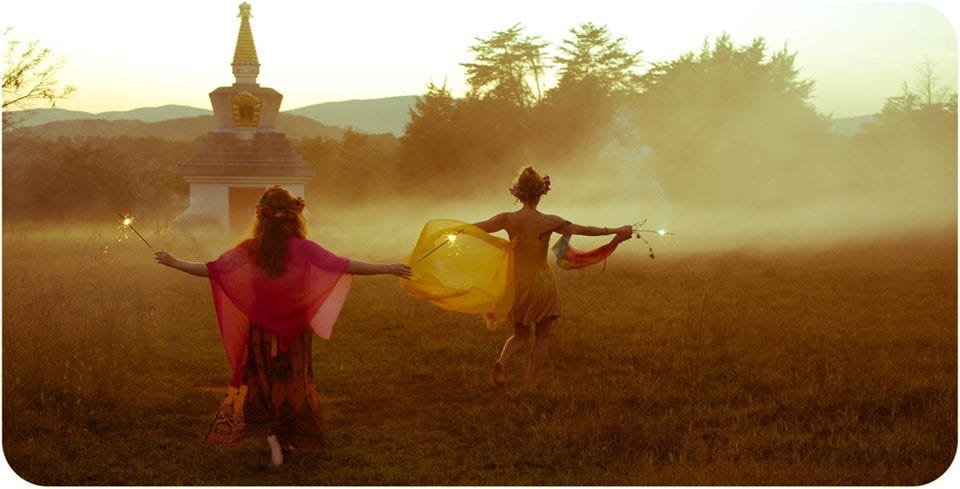
The directive to pray without ceasing comes round and round, most often as I move through the high meadow grasses and hear their ceaseless shushing as they give voice to wind.
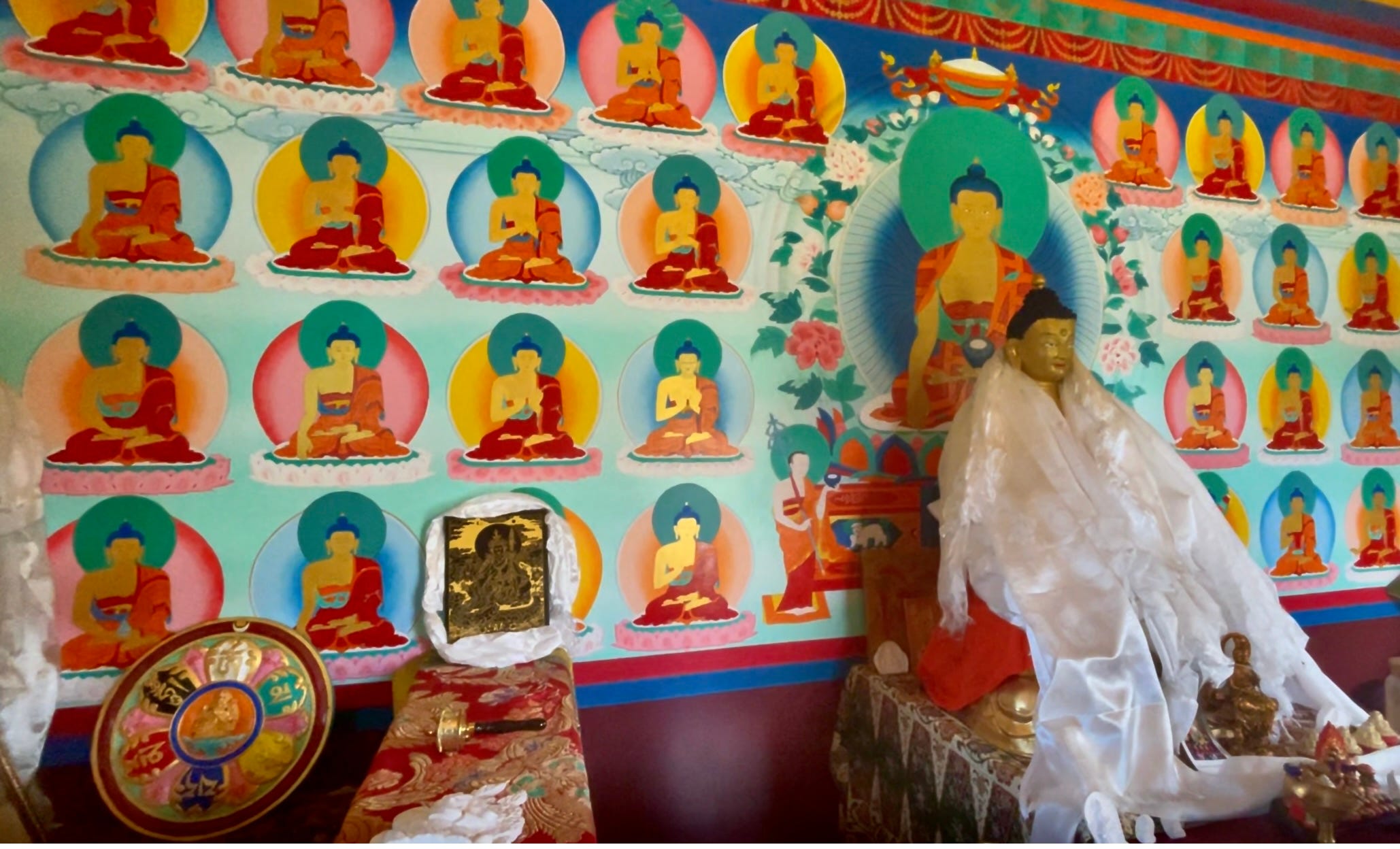
The images that follow are oddly, unreasonably, from Eric Valli’s beautiful film, “Himalaya” where repetitions of the hand and the chant center the story of a Tibetan Buddhist village passing through death and grief.
In Thessalonians 5: 16-18 St. Paul writes, “Rejoice evermore. Pray without ceasing. In everything give thanks.” The Buddha reminded his followers to practice constant mindfulness. Constancy and the value of repetition is common to most faiths. The fingering of beads. Chanting. The turning of the prayer wheel. The dance.
When I bought the back sixty acres at Native Meadow the stupa was there, but the Tibetan Buddhist community previously in rotating residence at the house, now studio, was gone. They had been absent for some years since the landowner who invited them to create a retreat center here sold the land to the owner I bought it from.
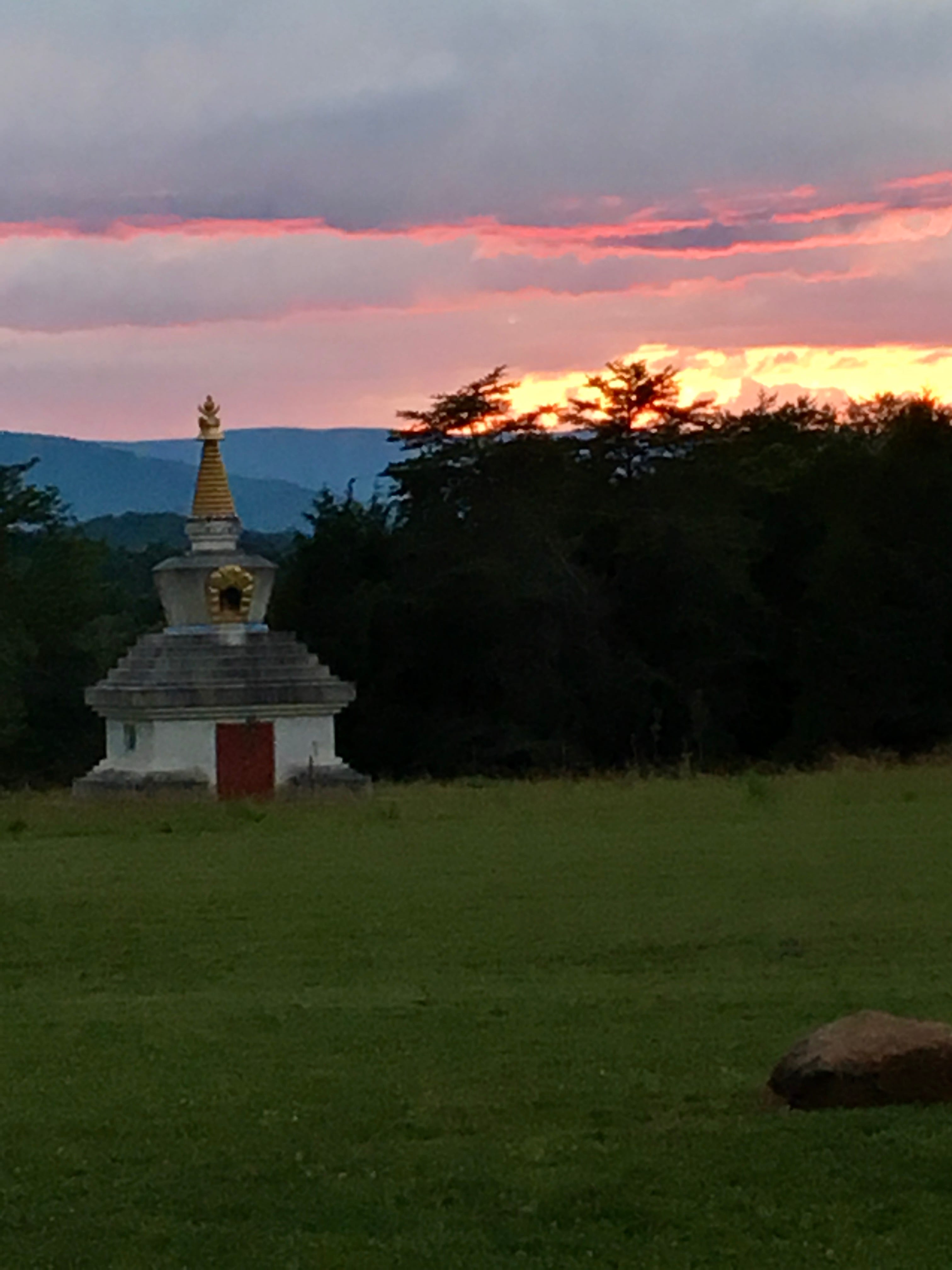
As we began the transformation of the house into studios detailed here in “Red Clay Halo”, we were told that the leader of the stupa’s Tibetan Buddhist community was in silent retreat for 3 years and we sometimes joked that therefore, we didn’t hear much from him.
Over the years, it has been a challenge to identify a single person for communication and for giving notice of when folks want to or are coming to the stupa. But what I have come to understand is that this is something of a feature of this community, if not of its faith, and that simple trust is best and most reliable.
On occasion I see a person draped in robes of maroon and gold crossing the field to the stupa and there is nothing to do but celebrate and welcome.
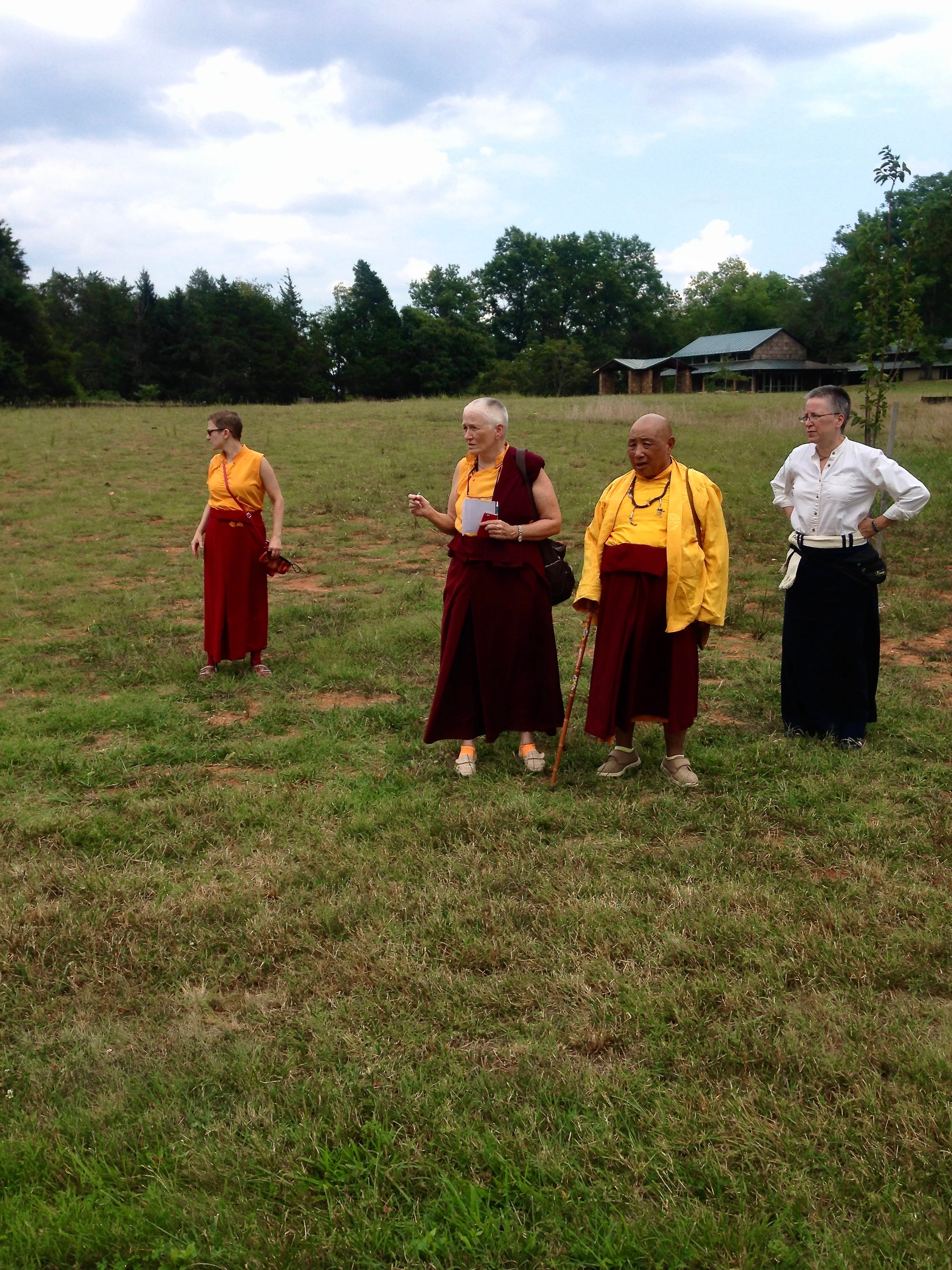
This week I spoke at length with Jean and Bruce, two members of the faith community from the time of residency and the building of the stupa. Despite asking, I had never heard a single peep from anyone about the loss of the house, the larger land or the ability to convene public sangha.
“Our teacher told us when we first had this resource to be mindful and accepting of impermanence. But it was a loss.” shares Jean.
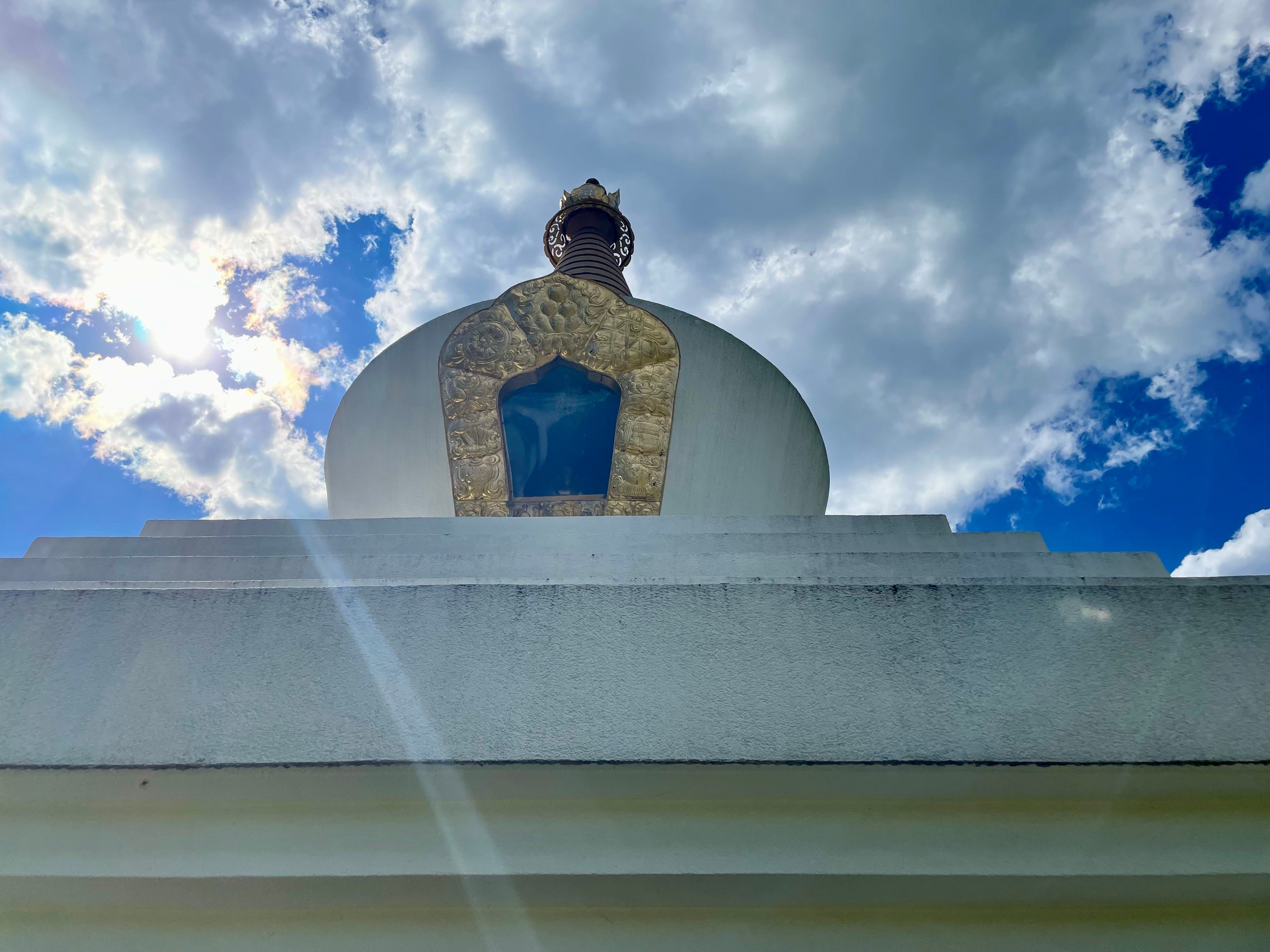
There are different kinds of stupas and the one here is a healing stupa, located to heal the wounds within this land and its spirits from the killing of the Native people, the practice of slavery and in particular, from the Civil War.
“Local spirits inhabit everything and when bad things happen, they are stirred up and can bring obstacles to spiritual practice as well as regional difficulties such as conflict, poverty and ecological damage. The stupa calms and befriends these spirits.”, says Jean. “The top of the stupa is filled with prayers and texts, scrolls. It is a reliquary.”
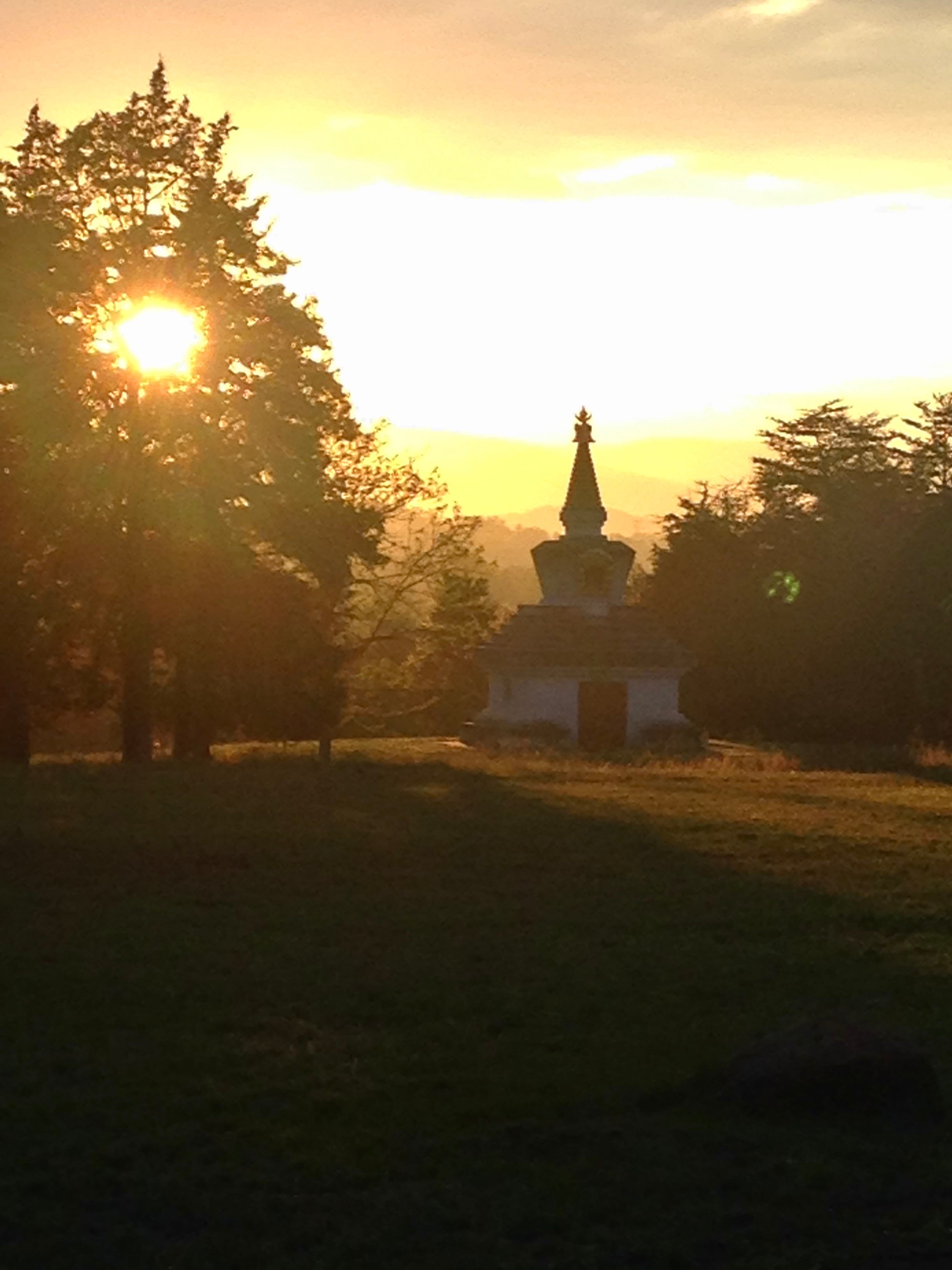
In the minds of those who created the stupa it thus has value as a kind of geomancy (the art of placing or arranging buildings or other sites auspiciously). It is placed so that each of its four sides face the four directions. It has the best sunset view on our land.
“Building a stupa is considered extremely beneficial, leaving very positive karmic imprints in the mind. Future benefits from this action are said to result in fortunate rebirths. Fortunate worldly benefits also result, such as being born into a rich family, having a beautiful body, a nice voice, bringing joy to others, and having a long and happy life in which one's wishes are quickly fulfilled. On the absolute level, one will also be able to quickly reach enlightenment, the goal of Buddhism.
Destroying a stupa, on the other hand, is considered an extremely negative deed, similar to murder. Such an action is said to create massive negative karmic imprints, leading to serious future problems. It is said this action leaves the mind in a state of paranoia after death has occurred, leading to unfortunate rebirths.” -Wikipedia
“Other than in America, stupas aren’t really meant to be gone into. People go around it. But we felt, and the lamas are fine with it, that it makes sense to be able to go into it so practices can be done there. You don’t find that in Asia.” says Bruce.
Here we mow a circular path around the stupa to facilitate the prayer practice of circumnavigating the structure clockwise at least five times.
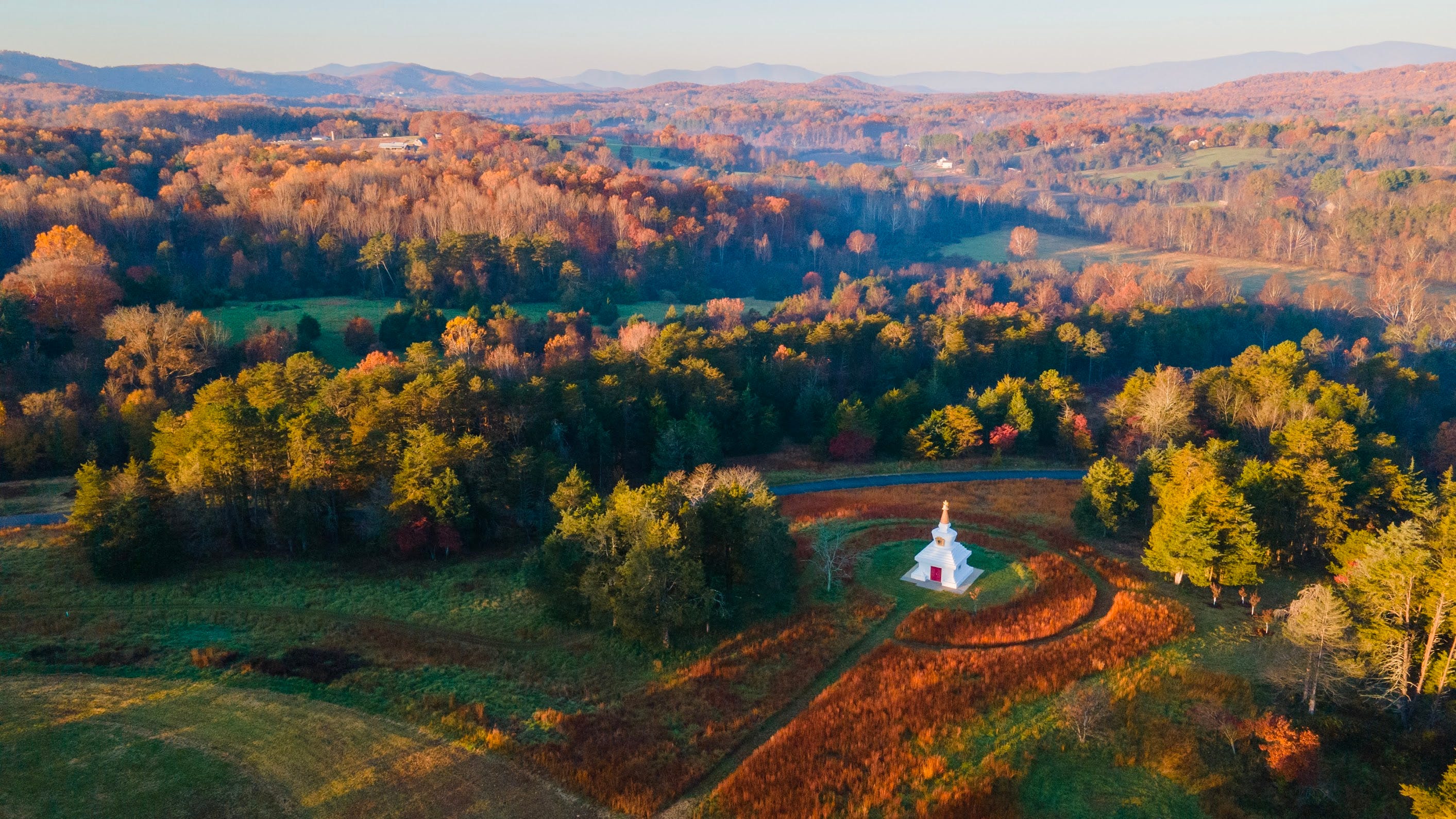
I am more than ready to believe that this structure, somewhat incongruous within a rural Virginia landscape, is radiating healing. For this ground has been and continues to be a place of healing for me and for many as we add our own creations, prayers and practices.
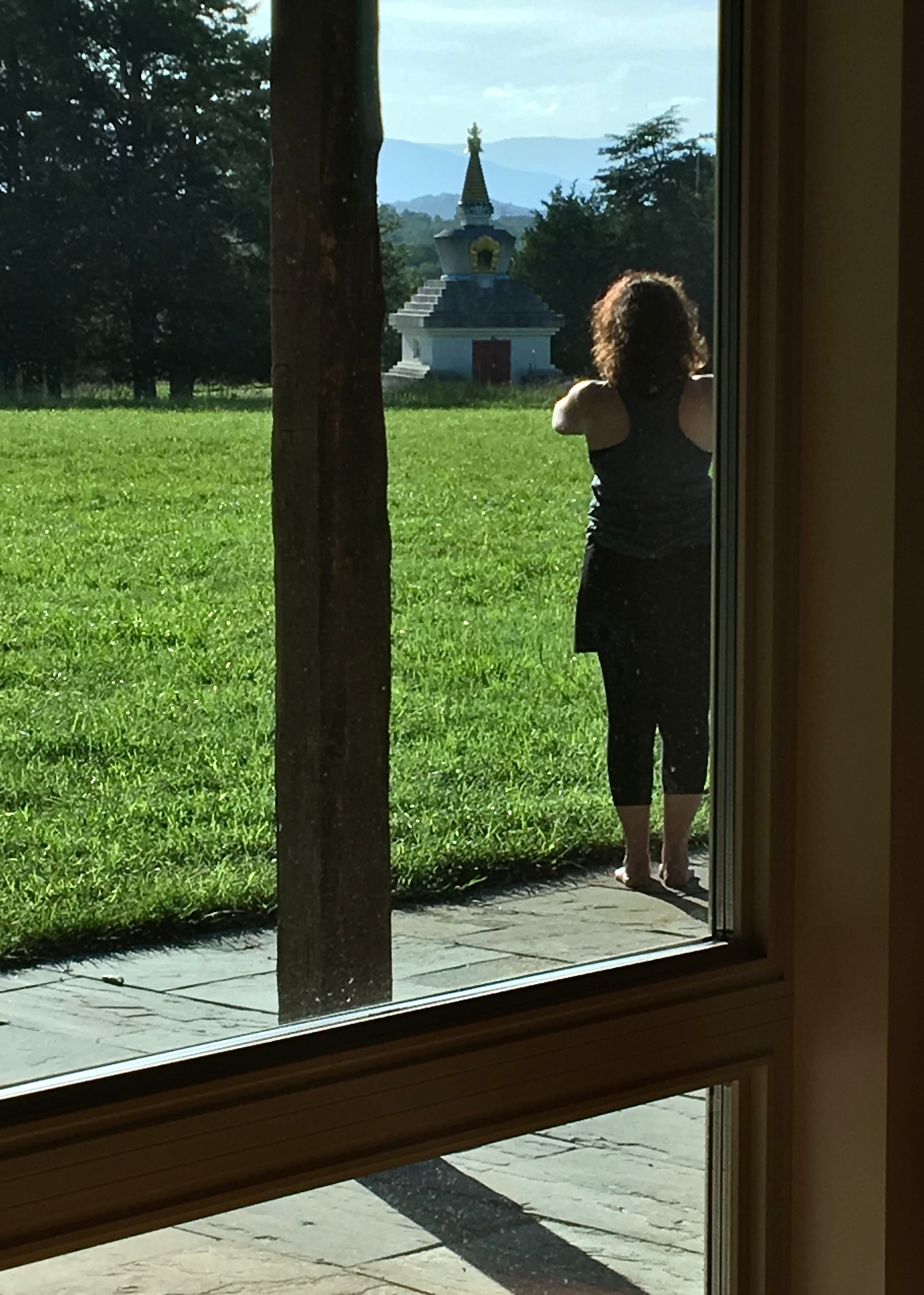
Jean says, “From what I have read on your substack, and from what you have said, your project for this piece of land and the stupa are perfectly (she clasps her hands together and lifts them). The stupa and you are perfectly together. Aligned. It moves me to think about it.”
In the summer of 2014, this community’s Lama visited the newly made studios. He had lived in the house years before. A small round figure now using a cane, he made his way through the newly cleaned and opened spaces, his words translated by two attendant nuns. He said one thing to me in English. “More better. Every way.”
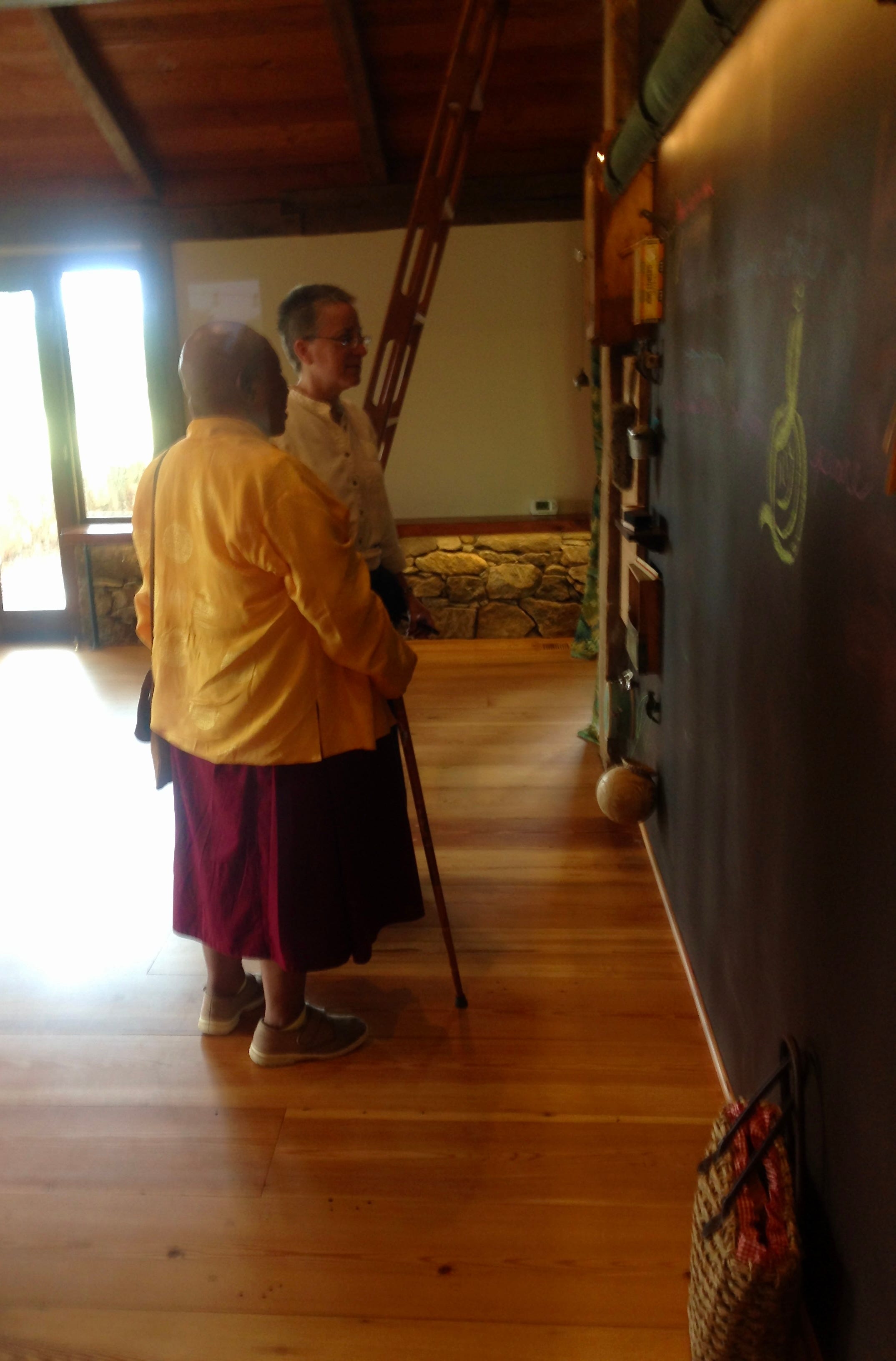
This seemed both a blessing and perhaps a fine motto for our work here and on this earth. Can we leave things “More Better. Every way.” ?
Evidence
We’ve been drawing God for forty thousand years.
All of us. Me.
You.
On stone, in heart, for church, in dirt.
Still God leaves scant evidence,
though he comes often to calm our muttering.
For we are in love and stubbornly distracted
by the world he made to make us.
Juicy, hot blood, fleshy world
all cast about with thighs, cocks -
with skin and breath and broth and breast
and the quick clever click of human story.
I could go on forever and never even mention the smell of jasmine.
The slick holding of a baby fresh from inside me.
I could fail to speak of my finest lover.
His tongue.
All I can do is sing back
jolly praise for this earth of blessing.
An ant, an atom of an ant, yelping skyward.
Thanks, I pray, with petty ceasing.
—Kay Leigh Ferguson, June 2005
I intend to weed
The wet after a summer storm
makes them happy.
And vulnerable.
Instead I sit in the shed and insist
that self pity sit at least in the other chair.
Old whiner needs a shave.
Two fat carpenter bees in the small window.
One hurls his buzzing head against the glass,
believing only the light’s lie -
that there, just before him, is the sun on the red geraniums.
He knows exactly what he wants.
He is sure. And furious.
And wrong.
The wide open door not three feet away.
As I pound my head against the glass of my story.
Renewing my sure and raging sadness,
I watch us. Do this. Again.
Is he my helper, my bodhisattva bee?
Or is it the other one?
Who without a sound begins, slowly, the boring out?
—Kay Leigh Ferguson, 2003
Sources & More:
Photographer, Lex Gibson: https://www.instagram.com/lexgibson/?hl=en
“Himalaya”, the film by director, Eric Valli: https://www.imdb.com/title/tt0210727/
“Red Clay Halo: Today at Native Meadow #26 https://todayatnativemeadow.substack.com/p/red-clay-halo
“More better, in every way” will be my new mantra. Why do all your substacks make me tear up? Thank you for your stewardship & your heart.
Gratitude without ceasing. How fine that you repainted the stupa in the field and mow around it and welcome devotees to walk around five times and be open to healing. I will look around me to see what I have been given to care for and bring healing..